
Two Pictures, One Reality
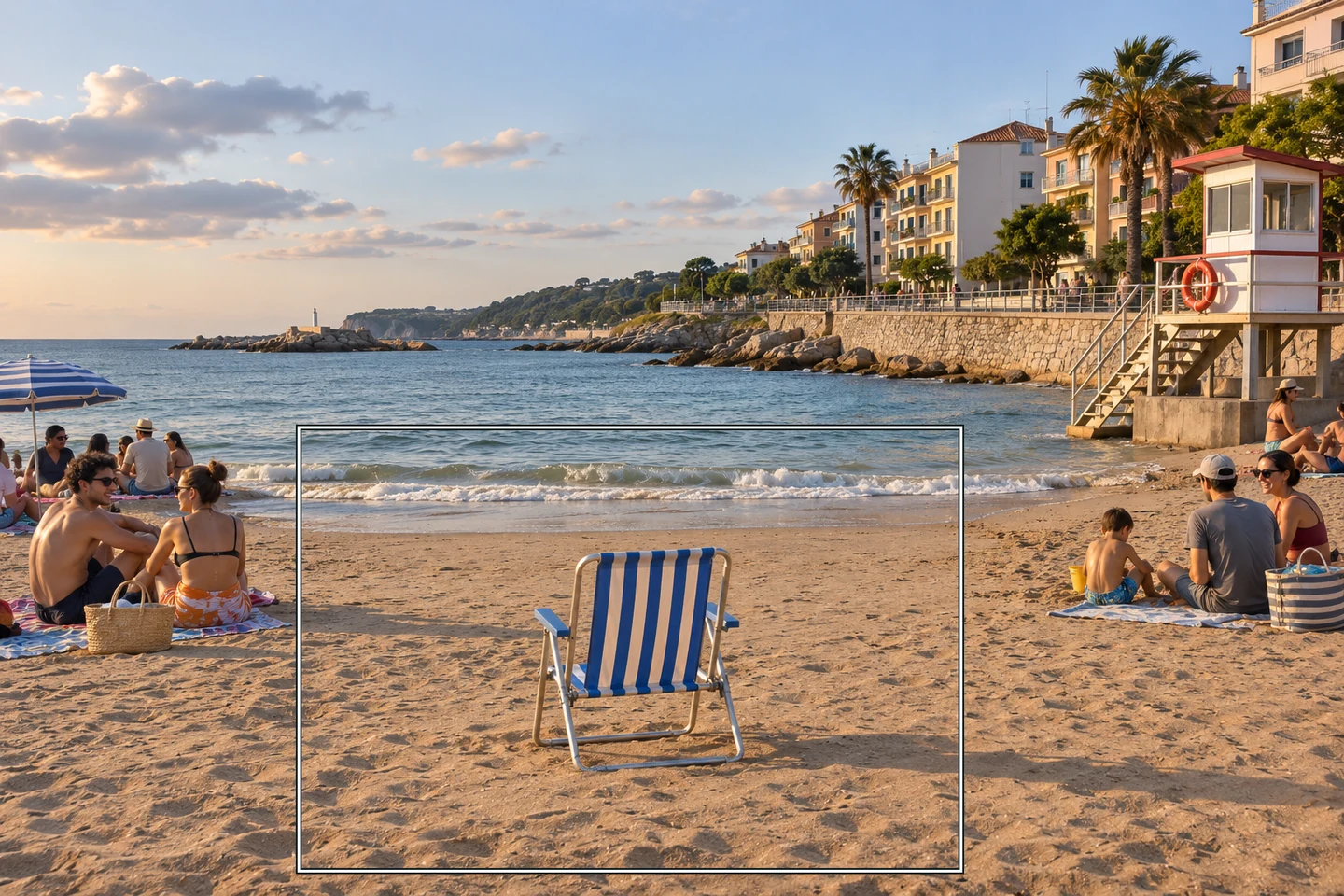
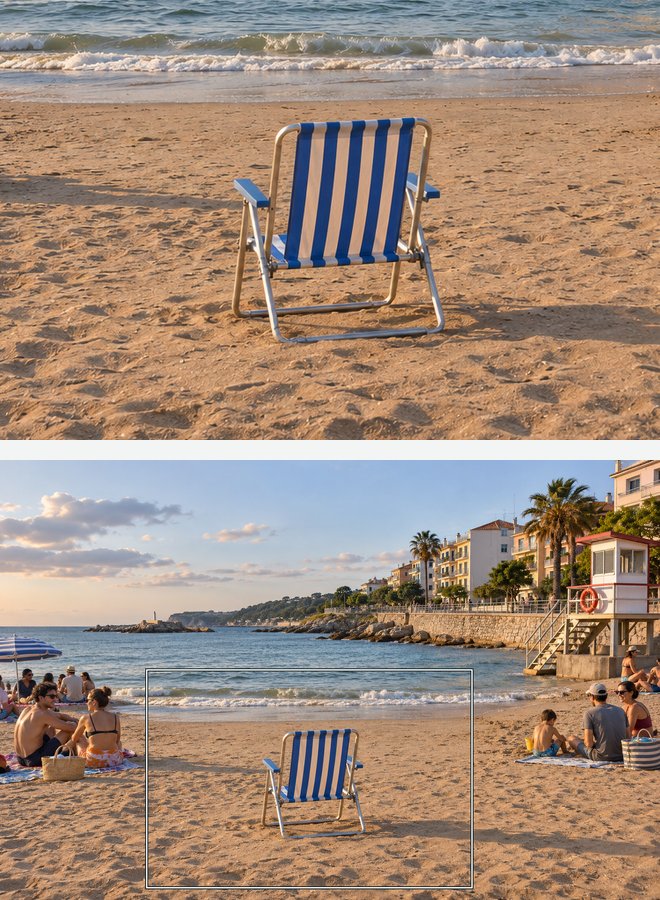
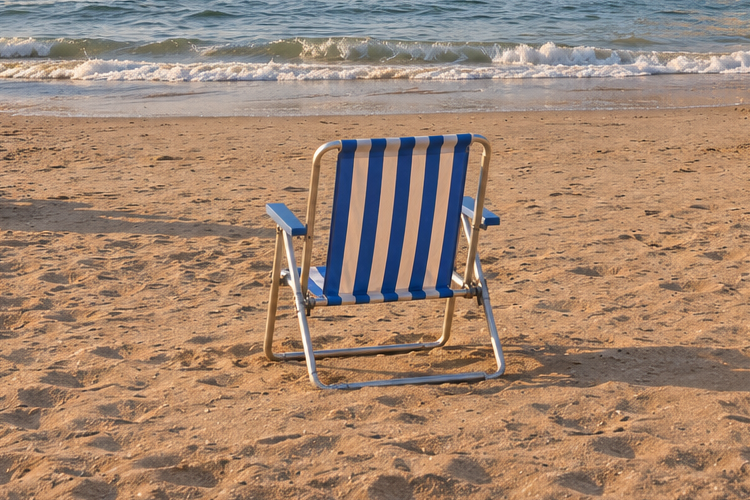
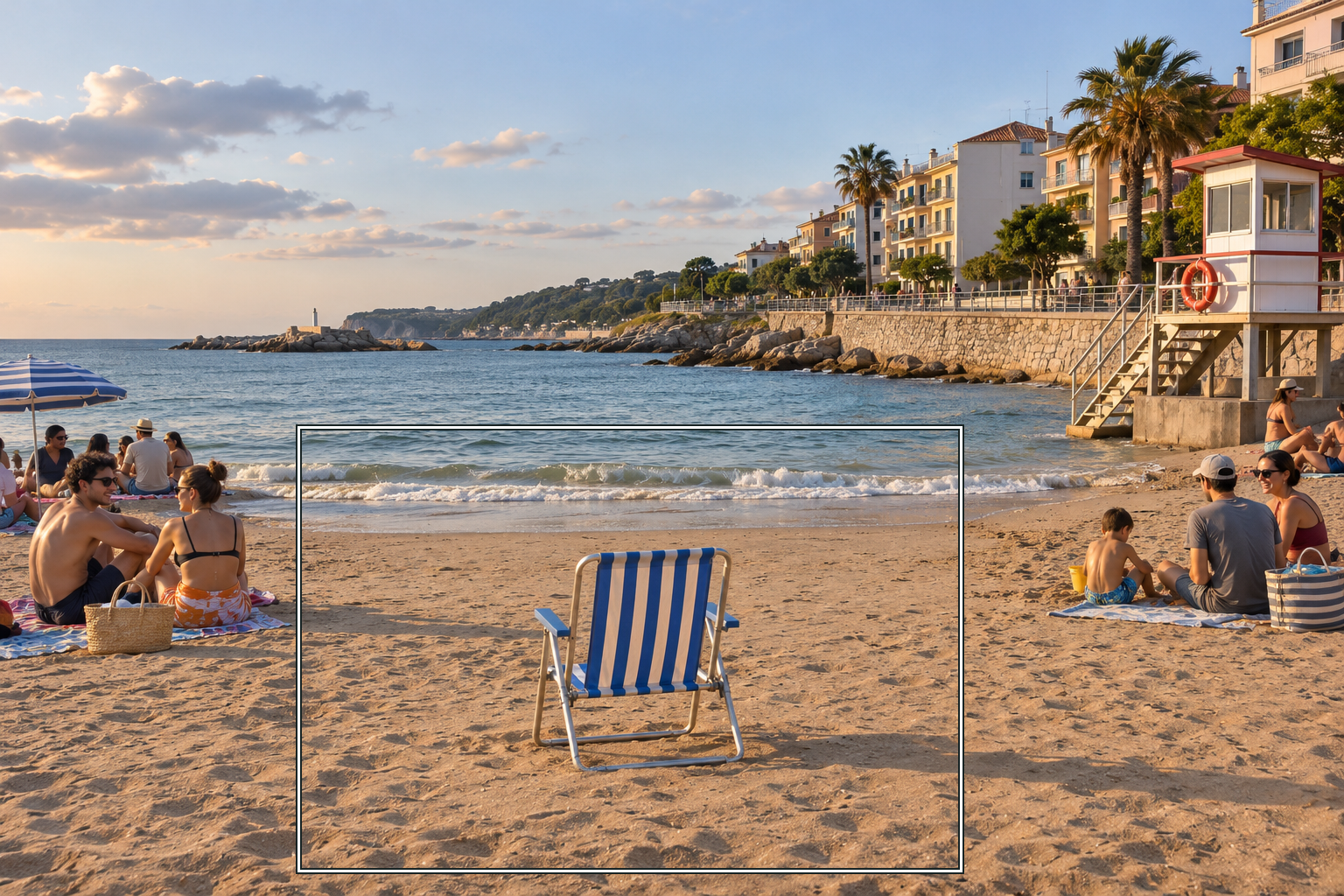
An empty striped chair faces the water. A wave breaks at the top of the picture, and the rest is sand, marked here and there by footprints. It looks like the kind of beach you go to when you want to be somewhere nobody can find you.
In the wider frame, somebody would find you almost immediately. People are sitting on towels to either side of the chair. A low wall separates the beach from the buildings behind it. A lifeguard station stands on the right. The chair occupies exactly the same place in the scene, yet the solitude that seemed to belong to the whole beach turns out to belong to a rectangle.
The two views below come from one AI-generated demonstration scene. The tight version was cut directly from the wider image. In a photograph made with a camera, every retained detail could be just as faithful to what was there, and a viewer could still come away with a misleading story. Cropping is an editorial decision because the edges help determine what the viewer takes the picture to be about.
Demo A · The Perfect Vacation
Tight crop first, wider frame with crop box second.
Inspect F1 at full size
This view keeps the selected image at its original dimensions. Focus the frame and use arrow keys to scroll.
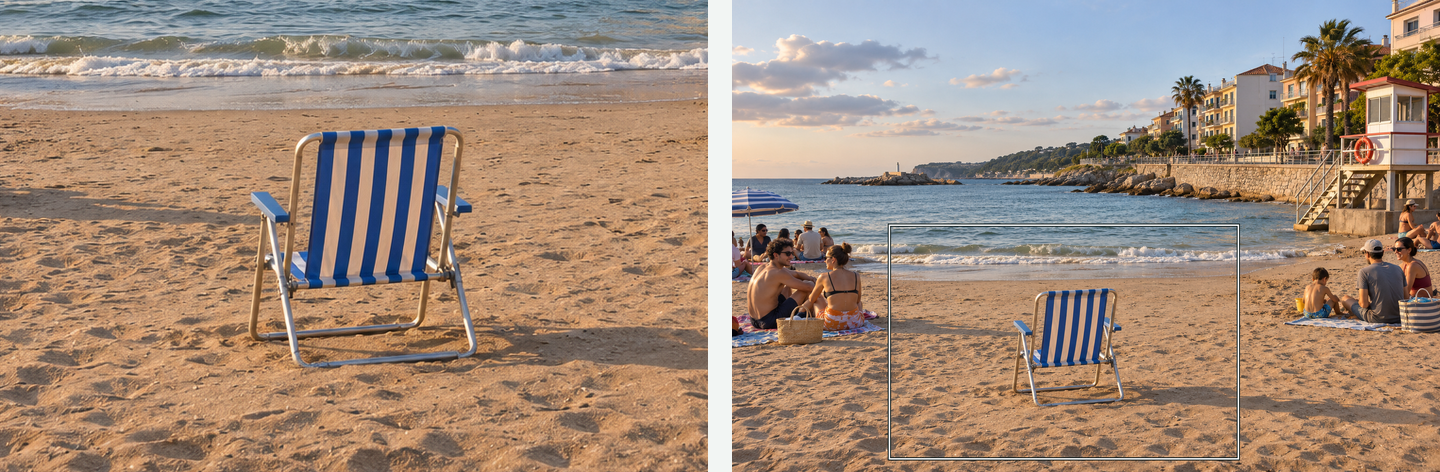
Open original tight crop · Open original wider frame with crop box
Every Photograph Leaves Something Out
A photographer makes the first cut by standing somewhere. From a sidewalk, a birthday party might appear as six people around a table. From inside the room, the same party might be a child waiting under the table for the lights to go out. The child’s picture could be a better account of what the evening felt like to one person. It would offer little help to someone trying to work out who came.
The shutter makes another cut. A frame records the glasses raised for a toast and leaves out the minute it took to get everyone to stop talking. Even the widest image has a position and a moment. Calling it the full frame means it contains the whole available image. The rest of the evening is still elsewhere.
These choices are part of why photographs can tell us anything at all. A picture can make the frosting on a child’s sleeve worth a second look. The trouble begins when a crop made to bring one detail forward is used to answer a larger question. The sleeve has a lot to tell us about that child. It has very little to tell us about the guest list.
When the Frame Changes the Story
Imagine the beach picture with two captions. “My spot for the afternoon” describes something the tight frame can show. “We had the beach to ourselves” makes a claim about the part of the scene the tight frame leaves out. The same image would carry either sentence with apparent ease. Only the wider frame lets us see how differently the two claims hold up.
In the auditorium demonstration below, a speaker stands at a lectern. The tight version includes the occupied front section, with heads and shoulders filling the bottom of the picture. The wider view brings back the aisle and rows of empty seats. If the picture accompanies a sentence about the speaker addressing an audience, the tight frame does the job. Beside “a packed house,” those empty seats become relevant evidence.
Demo B · The Successful Event
Tight crop first, wider frame with crop box second.
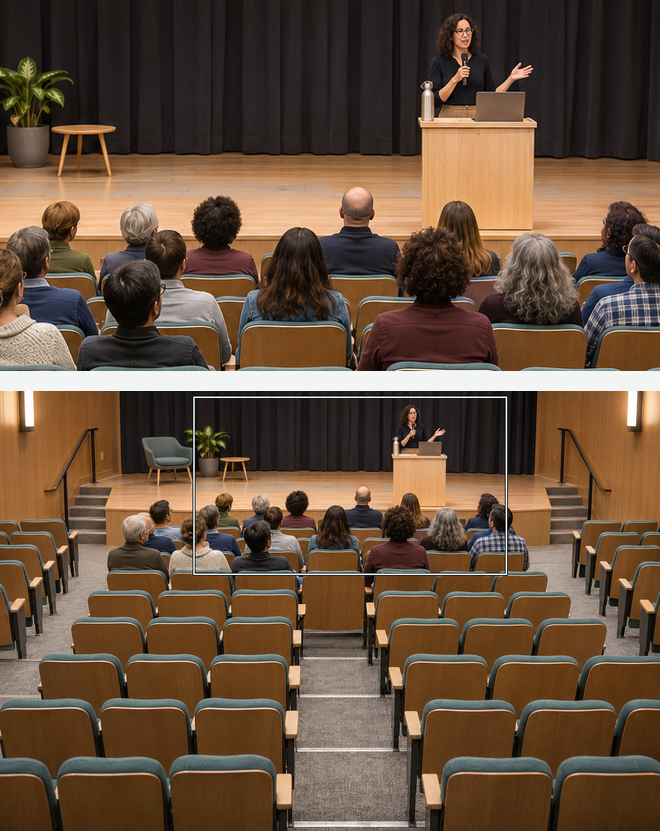
Inspect F2 at full size
This view keeps the selected image at its original dimensions. Focus the frame and use arrow keys to scroll.
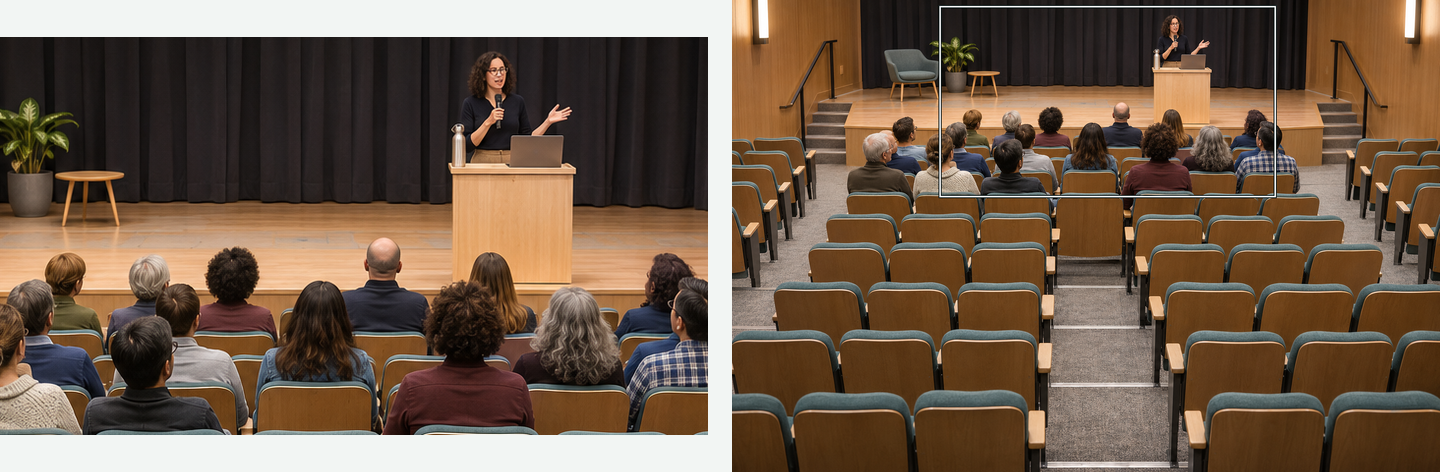
Open original tight crop · Open original wider frame with crop box
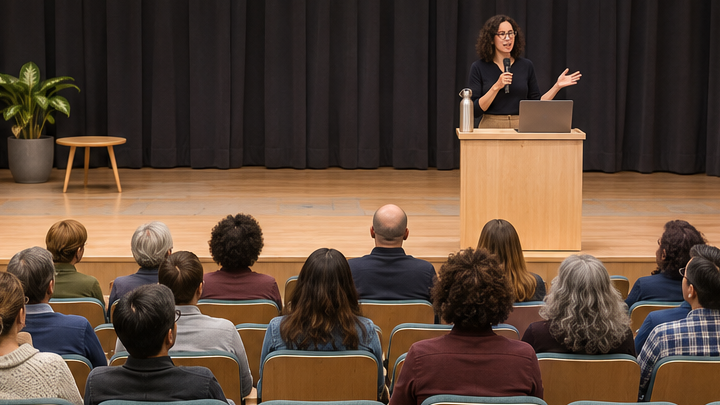
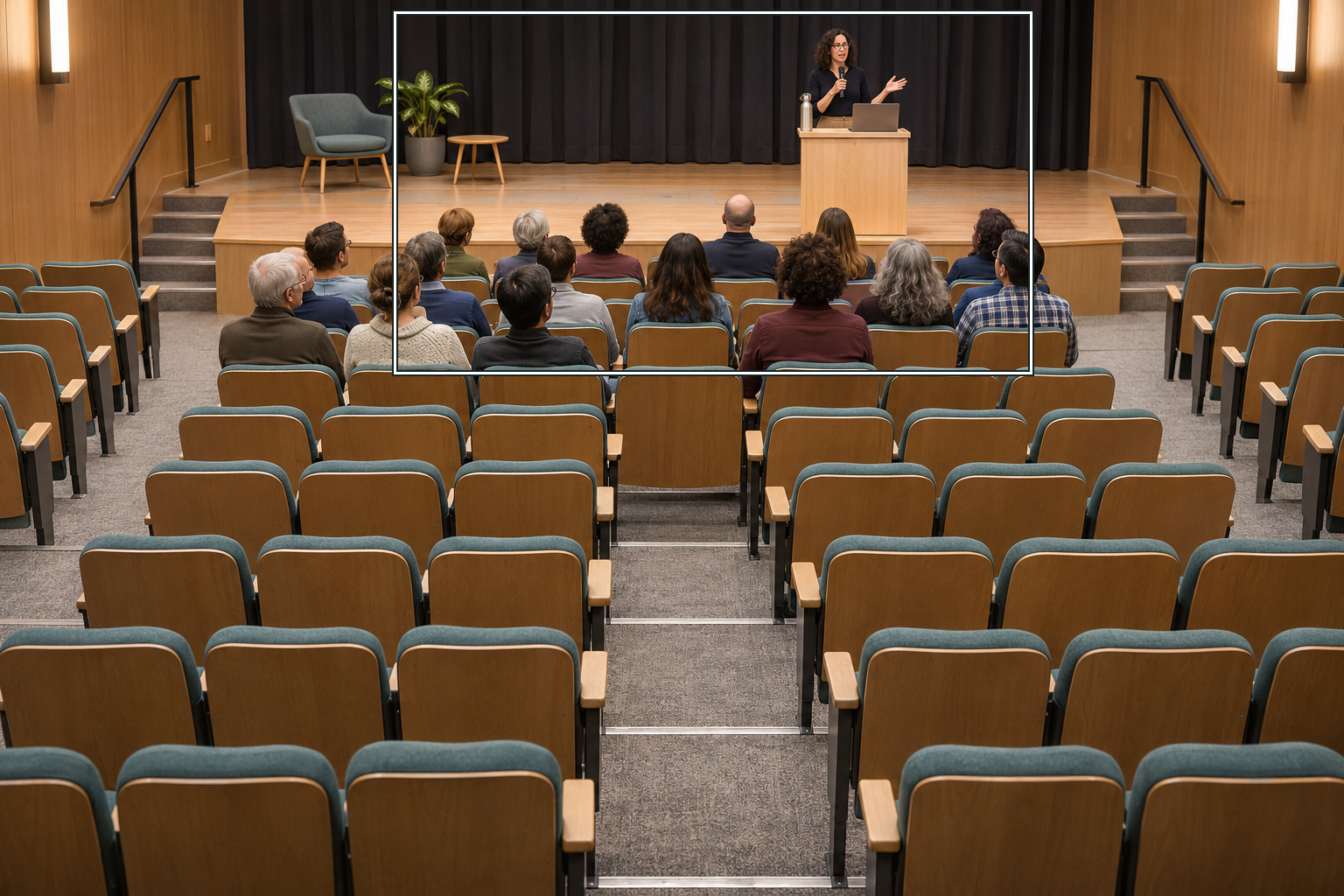
For a real event, even the wide view would leave questions. When was it taken? Were there seats outside the camera’s view? Did people come and go? There is a crop of this scene that could show almost nothing except empty chairs. It would be just as easy to overstate the case in the other direction. If the question is how many people attended, a verified count would do work that neither rectangle can.
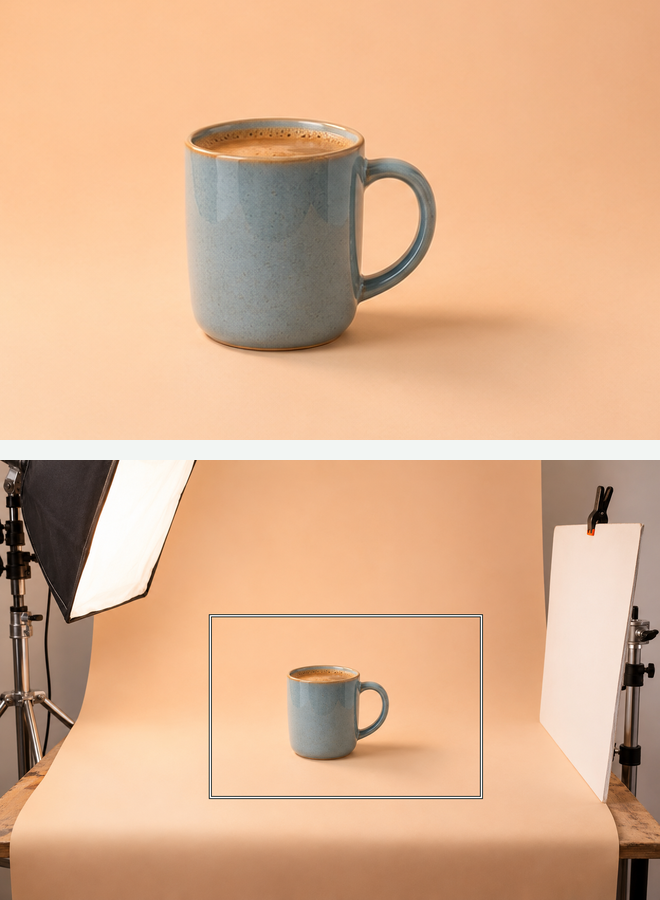
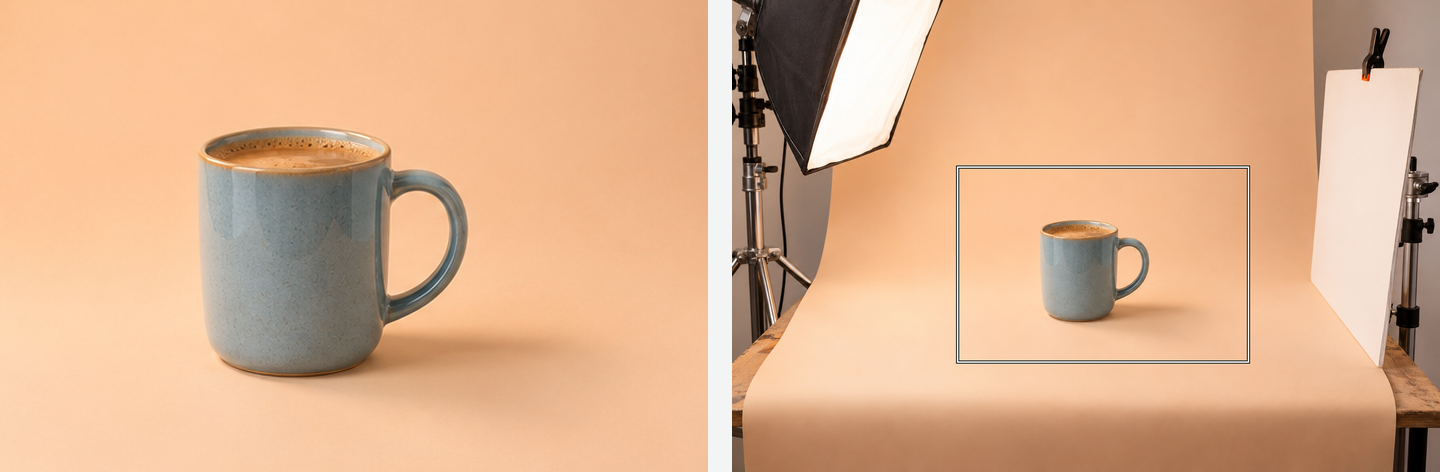
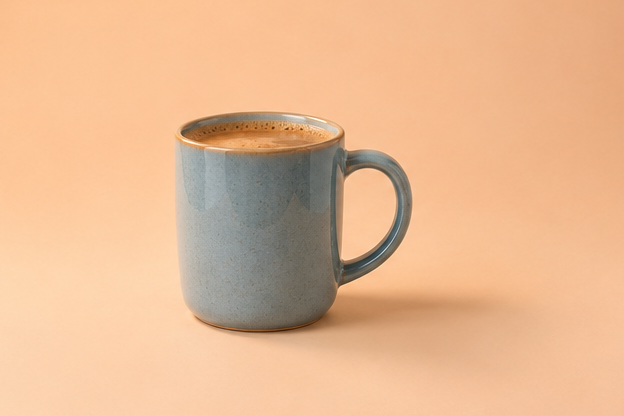
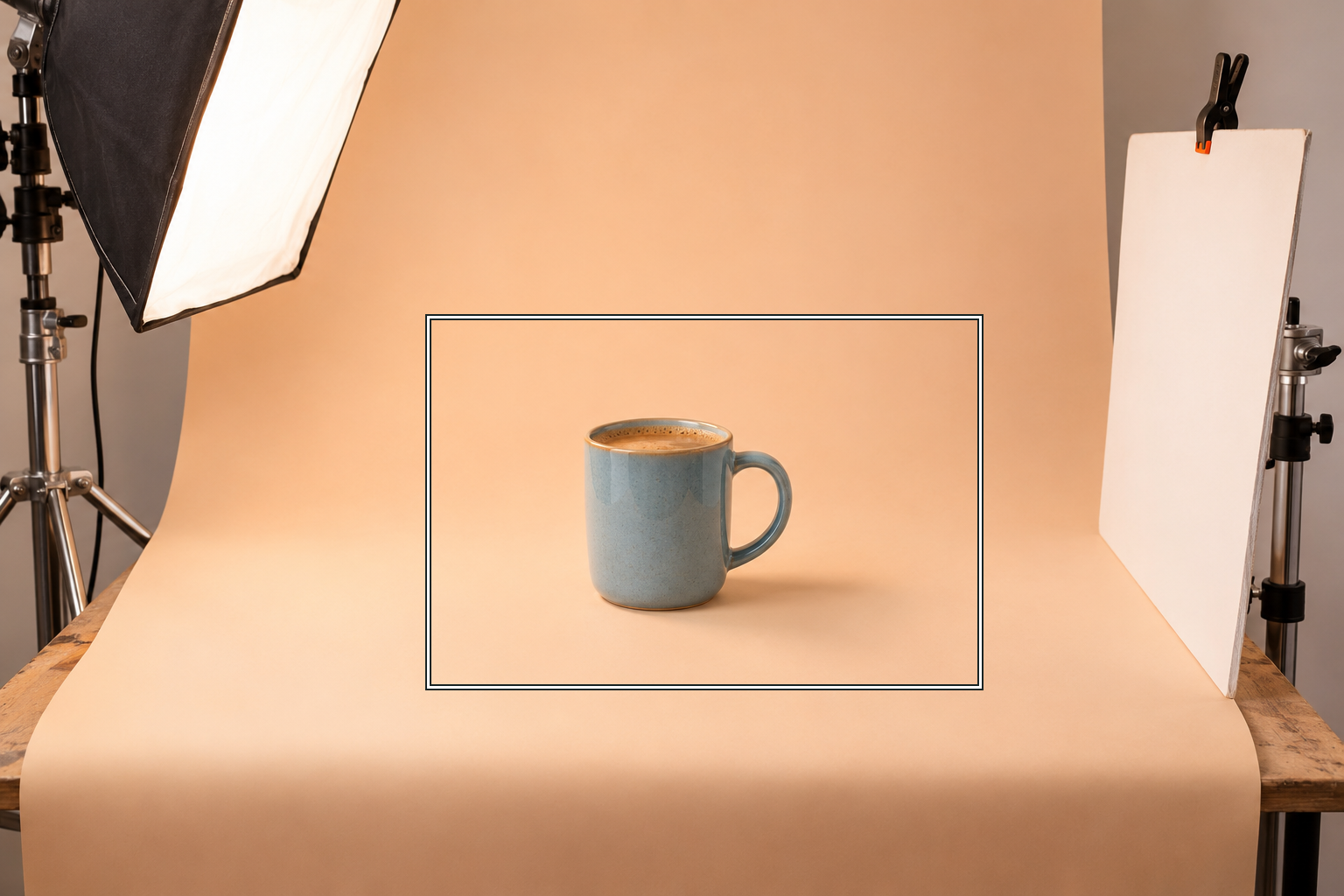
The mug on the peach backdrop offers a gentler case. The wider frame reveals a softbox, a white bounce board, stands, and the paper curling over the table. A shopper usually needs to see the mug’s shape and handle. Leaving out the gear can make both easier to inspect. If an image hides a chip on a cup being sold as undamaged, the omitted detail belongs to the claim. The useful distinction is between the setup a buyer can reasonably ignore and a feature that could change the purchase.
Demo C · The Product Photograph
Tight crop first, wider frame with crop box second.
Inspect F3 at full size
This view keeps the selected image at its original dimensions. Focus the frame and use arrow keys to scroll.
Open original tight crop · Open original wider frame with crop box
Why Context Changes What We See
The same shape can be easier to recognize in a setting where it belongs. A football player is at home on a field and would be out of place in a cathedral. The field also makes more immediate sense with a player in it. Psychologists Jodi Davenport and Mary Potter explored this relationship in four experiments using photographs that paired objects and settings that did or did not ordinarily go together. Participants saw each picture for 80 milliseconds before a visual mask and reported the object, the setting, or both. In those brief-viewing tasks, a fitting background could improve object identification, and a fitting object could improve identification of the background. Read the study in Psychological Science.
There is a detail worth keeping. In a separate comparison in the same paper, participants identified isolated objects more accurately than objects shown with backgrounds. The extra context had different effects depending on what the researchers compared. The researchers measured recognition of objects and settings under specific laboratory conditions. A reader’s judgment of an event’s popularity or a photograph’s honesty is a different question.
The experiments help frame a more modest thought about the demos. Rows of seated people let us recognize an audience. The wider view adds cues about the room and the distribution of people within it. “This is a talk” and “this talk drew a crowd” feel like neighboring thoughts. The picture has much stronger evidence for the first.
The Perfect Life Inside a Square
In the 2015 project #slowlife, photographer Chompoo Baritone put an Instagram-style frame inside a larger scene. In a picture published by PetaPixel, a laptop and a stretch of white bedding make the enclosed square look like a quiet, pared-back workspace. Look around the square and there are clothes, a cat, things on the wall, and the rest of the room. The surrounding details make the neat square funny because they are ordinary. Most people who have tidied one corner before taking a picture know the work that little rectangle can do. See Baritone’s project in PetaPixel.
Baritone’s pictures are an art project staged to make the boundary visible. They give us a way to talk about a familiar choice without having to diagnose the person behind every carefully framed post. A quiet corner of a busy room may be exactly where someone felt at ease. A sequence of quiet corners can also leave an audience with the impression that ease is how that person lives.
A personal feed is free to record favorite parts of a life. It helps to remember what kind of record we are looking at. We see a series of publishable moments, each selected for a reason. We rarely see all the nearby moments we are comparing our own lives with.
The Line Between Editing and Misleading
In January 2020, the Associated Press published a photograph from Davos, Switzerland, that cropped out Vanessa Nakate, a Ugandan climate activist. In its statement that day, the AP expressed regret and described Nakate as the only person of color in the photograph. The omission changed who was visible in a picture of the group. There is no need to infer a motive to understand why that mattered. Someone who saw only the published frame had no way to recover Nakate’s presence from the edges. Read the AP’s statement.
The AP’s published standards allow minor cropping for clear and accurate reproduction. World Press Photo, applying a separate contest standard, prohibits adding or removing people or objects inside the frame and addresses when other processing changes a photograph’s content. A boundary crop and an erased person inside the frame are different operations. As an editorial matter, both can affect what an audience understands about who was present. Read the AP’s photo standards and World Press Photo’s verification guidance.
Purpose gives these decisions their stakes. A portrait of one participant can properly exclude everyone else. A caption that presents the same portrait as a complete account of who attended requires more. Sometimes a precise caption is enough. Sometimes the right edit is to use the wider image, or to publish more than one view.
Look Beyond the Frame
The questions below work in both directions. Ask them when you encounter a picture making a claim and when you are about to choose an image to accompany one.
The Four Questions Beyond the Frame
- What am I actually seeing? Describe what is visible before attaching an interpretation. Several people seated near a lectern is an observation. A successful event is a judgment that may depend on much more.
- What might be outside the frame? Start with a plausible piece of context the image cannot answer for. Seek the original publication, a wider view, or a second angle when the question matters.
- Would the missing context change my interpretation? A reflector outside the mug picture can be incidental. Empty rows matter to a claim about a packed room. Decide which omissions bear on the particular claim.
- Does the image support the claim being made? Read the headline, caption, or product description next to the picture. If the image proves less than the words suggest, ask for corroboration. If you are the one publishing, narrow the words or choose an image that carries the claim.
A useful habit for editors is to write the caption while the wider frame is still on the screen. It is easier to see what a sentence implies while the information it might accidentally contradict is right there.
What Isn't in the Picture?
Go back to the blue chair. The first picture still has a quietness to it. That quality belongs to the picture and to the patch of sand it shows. The people on either side were part of the same scene all along.
Much of what we know about places we have never visited and events we did not attend comes through other people’s choices of where to look. We rely on those choices. We can also learn to see their limits. Sometimes that means looking for one more photograph. Sometimes it means changing a sentence. Here is a place where someone could sit quietly for an afternoon. That is a smaller claim than having the beach to yourself, and the picture can hold it.
Editorial note. AI assisted with research, source checking, drafting, and editing. The three demonstration scenes were generated with AI. Each tight view is a pixel crop of its corresponding source image.